Former Residents of Richmond
Wilbur Wright was born in Henry County, Indiana, and spent a few boyhood years in Richmond. When the Wright brothers became famous, the Richmond Palladium went looking for the Hoosier boys it had barely noticed, and it never quite agreed with itself about what it found.
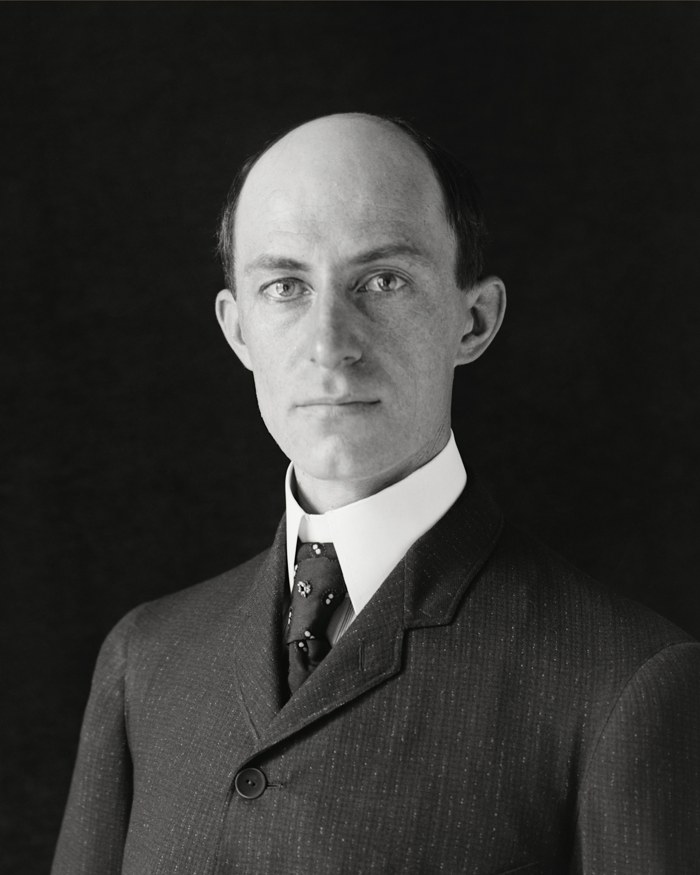
On July 1, 1912, a month after Wilbur Wright died, the Richmond City Council heard a memorial read aloud. Its title, as the Richmond Palladium printed it the next day, made a claim: “Wilbur Wright, Indianian.” The subhead went further. “For Such Was the Celebrated Aviator and Discoverer of Flight, Thus Adding Another to the Long List of Hoosier Notables.”1
The memorial was signed by Esther Griffin White. “That this great man attended our public schools and played about town with his fellows,” she wrote, “is, naturally, the thing in his career that takes the fancy of the citizens of Richmond.”1
Dayton, Ohio, had the Wright brothers’ bicycle shop, their home and their fame. Richmond had a few years of their boyhood and some cousins. For more than a decade, starting in September 1908, the Palladium worked that connection hard. Its stories show a town trying to claim a world figure, and getting the details of its own claim wrong more than once.
“Sons of a native of Indiana”
The first Indiana report of the Wrights’ success came from Dayton. On Dec. 21, 1903, the Indianapolis Journal ran a special dispatch about the “Wright flyer,” “which was tested at Kitty Hawk, N. C., yesterday.” The dispatch was dated Dec. 20. Its headline called the inventors “Sons of a Native of Indiana” and said “Wilbur Was Born Near New Castle.”2
The dispatch said the brothers were “about thirty years old,” and that their parents “came to Dayton from Indiana when Wilbur was two years old.” It said both brothers had attended Dayton’s grammar and high schools.2 It did not mention Richmond. The Palladium’s later accounts, drawn from relatives and old neighbors, would put the brothers in Richmond as boys.
The week of the flights
Richmond took notice in September 1908. That month Orville Wright was flying for the Army at Fort Myer, Virginia, and Wilbur was flying in France. On Sept. 10, the Palladium reported that Orville had broken “all aeroplane records” with a morning flight of 57 minutes, then stayed up 1 hour, 2 minutes and 15 seconds that afternoon, and then taken up Lt. Lahm of the Army Signal Corps.3
The same front page carried a second story under the headline “Wright Brothers Were Residents of Wayne County.” “But few persons who have read of the wonderful accomplishments of the famous Wright brothers,” it began, “know that the two men, Orville and Wilbur lived in this city when boys.”3
The story had a local source. “Mrs. D. K. Zeller of this city is probably one of the happiest women that can be found in all Wayne county,” the paper said. The brothers’ mother, it explained, was her sister. The paper also named two cousins, Silas Zeller of Richmond and John Zeller of New York, formerly of Richmond.3
The rest of the story was less careful. It said both brothers “were born on a farm near Dublin.” It said they had lived in Richmond “for about three years” and “removed from this city about fifteen years ago.” It also said they “did not begin to experiment in aerial flight until they moved to Dayton and went into the bicycle business.” In Richmond, it said, the two “attracted no especial attention, but they were always popular with their school fellows.”3
The $1,000 offer
The day after that story, Richmond tried to bring the flying back home. On Sept. 11 the Palladium reported that the Fall Festival’s committee on arrangements had wired Orville Wright, “master of the air,” asking his terms for an aeroplane exhibition.4
On Sept. 12 the paper reported that the festival’s executive committee was considering “a most tempting offer” to Orville, “the world’s most famous aviator, and a former resident of Richmond.” The idea was to telegraph him an offer of “$1,000 in gold and his expenses for one successful flight.” The flight would take place at Athletic Park, with a small admission fee.5
Not everyone liked it. The paper reported that Secretary Harris of the Young Men’s Business Club favored the offer, and that Vice President P. J. Freeman was “not enthusiastic over it.” The promoters’ argument was about distinction. The Wright brothers, the paper said, “have never made a public flight with their aeroplane west of the Atlantic coast states,” and Richmond would be “the site of the first aeroplane flight ever made in the middle west.”5
By Sept. 16 the idea was dead. “There will be no balloon race, neither will there be an aeroplane exhibition by Orville Wright, during the Richmond Fall Festival,” the Palladium reported. The committee had decided both “would be too expensive.” It was doubtful, the paper said, “if Wright would come here for anything less than $1,000.”6
The bishop’s version
The next day the brothers’ father gave Wayne County its best story. Milton Wright, formerly a bishop of the United Brethren Church, was attending his church’s Whitewater conference at Sugar Grove, three miles north of Greensfork. On Sept. 17, 1908, the Palladium printed his account under the headline “Wright Brothers Always Interested in Aeronautics.”7
The bishop told the paper the boys had shown mechanical ability early. “About the first successful machine the lads perfected was a lathe,” the paper reported. “A grindstone was used for a fly wheel. Orville managed the lathe, while Wilbur furnished the power with his sturdy arms. This machine was made while the Wright family resided in Richmond.”7
Then the bishop went further than the Palladium had a week earlier. “It was in that city also,” the paper reported, “that the two brothers first became interested in aerial navigation and where they made their first efforts at flight.”7
He told the story of a toy. One day, he said, he brought home “a crude imitation of an aeroplane.” The boys watched it “float about the room until it finally struck the ceiling and remained there until removed.” After that, the bishop said, they built “a very crude airship” that flew “a distance of about three hundred feet,” launched from a track of pine boards with hoop iron nailed to the edges.7
The bishop also corrected the record on one point. Wilbur, the paper reported, “was born near Millville, Henry county, forty years ago.” Orville was born in Dayton.7
So within one week the Palladium had printed that the brothers were both born near Dublin, and that only Wilbur was born in Indiana, near Millville. It had printed that they did not begin experimenting with flight until Dayton, and that they began in Richmond. Hoosier First reports both versions as the paper printed them. The bishop’s account was secondhand, as told to a reporter, and the paper did not say which year the toy arrived.
Homecoming
In May 1909, the brothers came home from Europe, and Dayton planned a two-day celebration for June 17 and 18. The Palladium reported that Richmond relatives would be invited. They included Professor and Mrs. D. W. Dennis of Earlham College and Silas Zeller, cousins on the brothers’ mother’s side. “Richmond and Wayne county feel a peculiar interest in the exploits of Wilbur and Orville Wright,” the paper said. It placed their Richmond years “about 15 or 20 years ago.”8
Richmond’s businessmen wanted more than an invitation for relatives. At a meeting of the Young Men’s Business Club in June, the club decided that, if Dayton sent a formal invitation, Richmond would “turn out en masse.” The paper reported that some members were cool to the idea. The Centerville attorney Wilfred Jessup was not. “Let’s remember that the Wright’s formerly lived here,” he said. “They are just like old friends to some of us. They have relatives residing here now.”9
On June 16, 1909, Earlham College gave the brothers honorary degrees of master of science at its commencement. The brothers were not there. President Robert L. Kelly said the degree was to go to “two men who are brothers, who formerly lived in Richmond, and were students in the public schools of the city.” “Some of their teachers are now present in this audience,” he said.10
The next day, as Dayton’s celebration began, the Palladium found another Richmond memory. City Attorney T. J. Study told listeners that Bishop Wright had once retained him in a church trial held in Richmond. Young Wilbur, according to Study, claimed to know as much or more about the church constitution than his father. In the paper’s paraphrase, Study described Wilbur as “contentious and argumentative” and said he “appeared quite a bright young fellow.”11 The same page reported that Carl Fisher, president of the Indiana Aero Club, had stopped in Richmond on his way to the Dayton celebration. “The Wright brothers have invented the only practical kind of an aerial craft,” Fisher told the paper.11
May 1912
Wilbur Wright died of typhoid fever in Dayton on May 30, 1912. The Palladium’s front-page headline that afternoon called him “Formerly of This City.” The story said he “was born at Millville, Ind., April 16, 1867 and when a youth came with his parents to Richmond, where he attended the local high school with his brother Orville.”12
It added a picture of the boys. “While the boys lived in this city they became interested in mechanics and rarely played with their school mates, preferring to make and fly kites or to build machines of various kinds.”12 Four years earlier the same paper had said they were “always popular with their school fellows.”3 The 1912 story also gave the family’s stay as “little over two years.”12
Elsewhere in Indiana, the Decatur Daily Democrat called him a “Hoosier Lad.” “Wilbur Wright was a Hoosier lad, being born near Millville, Indiana, April 16, 1867,” it said. “His education ended after four years in the Richmond (Ind.) and Dayton (Ohio) high schools. He was unmarried.”13
The memorial
Esther Griffin White’s memorial, read to the City Council a month later, was the fullest account of Richmond’s Wrights. She gave the years as 1880 to 1884.1 She listed three Richmond addresses: “the third block on North Fourteenth, the fourth on North Twelfth, next to the old home of Mr. and Mrs. Daniel Johnston,” and “on South 13th.”1
She wrote that Orville had been a pupil of Miss Sarah Hill, “whom he holds in the highest regard.” Wilbur, she wrote, attended the high school, and “while standing third in this class, he did not graduate, caring little for its form.”1 He admired a high school teacher, Dr. Zachias Test, whom a friend had called a “literary miser.” According to White, the boy said that “Dr. Test was fine to get things from.”1
She also wrote about circuses. With Rush Miller and the Johnston boys, she said, the Wrights “held a number of circuses and animal parades that were of such proportions as to be celebrated in the local press.” The Johnstons’ father was a taxidermist and lent them specimens, which “naturally added to the bizarre effects in which they all delighted.”1
White quoted a cousin, Mrs. David W. Dennis, wife of the Earlham professor, on the household. “Their’s was not a home,” Dennis said, “in which you heard the tittle tattle of the neighborhood. But a cultured household where art, literature and politics were discussed and good books read.” The family, she said, had “a library of over two thousand volumes.”1
White also passed along a family story about the boys’ mother: “It is told of her that she never called in anyone to adjust her sewing machine.”1
Orville tells it
Ten years later, in March 1922, the Junior Palladium, the paper’s children’s page, got the circus story from Orville himself. “Mr. Orville Wright told this story with merry interest to the editor of the Junior Palladium a few days ago in his Dayton office,” it reported.14
In the Junior Palladium’s version, Wilbur was 13 and Orville 9. The “animals” were stuffed animals and birds from the Johnston family collection. Wilbur wrote a notice of the show and parade and its line of march, along Main and North A streets. The boys walked “up and down the square in front of the office several times” before they dropped it in the newspaper’s letter box “and then they ‘beat it.’” It ran. The crowd, the paper said, was too large for the barn.14
The 1922 story gave the Richmond years as 1881 to 1884.14 On the toy, its account differed from the bishop’s. The toy, a “flying screw,” arrived when Orville was seven and Wilbur about 11, and “the family was then living in Cedar Rapids, Ia.”14 That put the start of the brothers’ interest in flight in Iowa, not Richmond.
A week later the Junior Palladium printed more memories from people who had played with the brothers. Wilbur and his neighbor Gansey Johnston, it said, read about the telephone in Scientific American and strung a homemade line of baking powder cans and wire between their upstairs rooms, with ropes tied to their feet to wake each other. Over that line, the paper said, the boys planned their parade. Rush Miller led it on a white pony. Gansey Johnston led a black setter dog as “the lion.” Wilbur and Orville pulled carts with the stuffed animals and served as “ringmaster and manager of the show.” A boy named Harry Morrow walked inside a panther skin.15
What the record shows
Over 14 years, the Richmond Palladium placed the Wrights in Richmond for “about three years,” “little over two years,” 1880 to 1884 and 1881 to 1884.3,12,1,14 It printed that both brothers were born near Dublin and that only Wilbur was born in Indiana, near Millville.3,7 It printed that their interest in flight began in Richmond and that it began in Iowa.7,14 It described the boys as popular with their schoolmates and as boys who rarely played with them.3,12 Hoosier First reports these as the paper printed them, without choosing among them.
The parts of the story that come from named witnesses are steadier. The bishop described the lathe built in Richmond.7 White and the Junior Palladium both named the Johnston family’s stuffed animals and the circus parades.1,14,15 Orville himself told the newspaper about a notice his brother wrote for a Richmond paper.14
Hoosier First has not located the circus notice Wilbur wrote. White credited an extended write-up of one of the shows to Isaac Kline, the first owner and editor of the Richmond Item.1 The 1880s Item is not among the newspapers Hoosier First searched for this story.
White ended with baseball. “When others were grandstanding, throwing fancy curves and stealing bases Wilbur Wright was playing ball,” she wrote.1 Richmond, for its part, kept score.
How he died
Wilbur Wright died of typhoid fever at the family home in Dayton, Ohio, early on Thursday, May 30, 1912. He was 45.12,13
The Decatur Daily Democrat said he had been ill “since May 4th with typhoid fever,” and that his father, Bishop Milton Wright, his sister and his brother Orville were with him at the end.13 The National News Association dispatch printed in the Palladium said he “succumbed to typhoid fever after a battle for life which lasted for weeks,” and that his physicians called his fight “one of the most remarkable struggles against disease” they had known.12
The two papers gave slightly different times: 3:30 a.m. in the Palladium, 3:15 a.m. in the Democrat.12,13