One World at a Time
May Wright Sewall built schools, clubs and an international women’s movement on reason and organization. In 1897 a suffrage speaking date took her to a spiritualist camp in New York. She kept what happened there largely out of print for more than twenty years, then published it in the last months of her life.
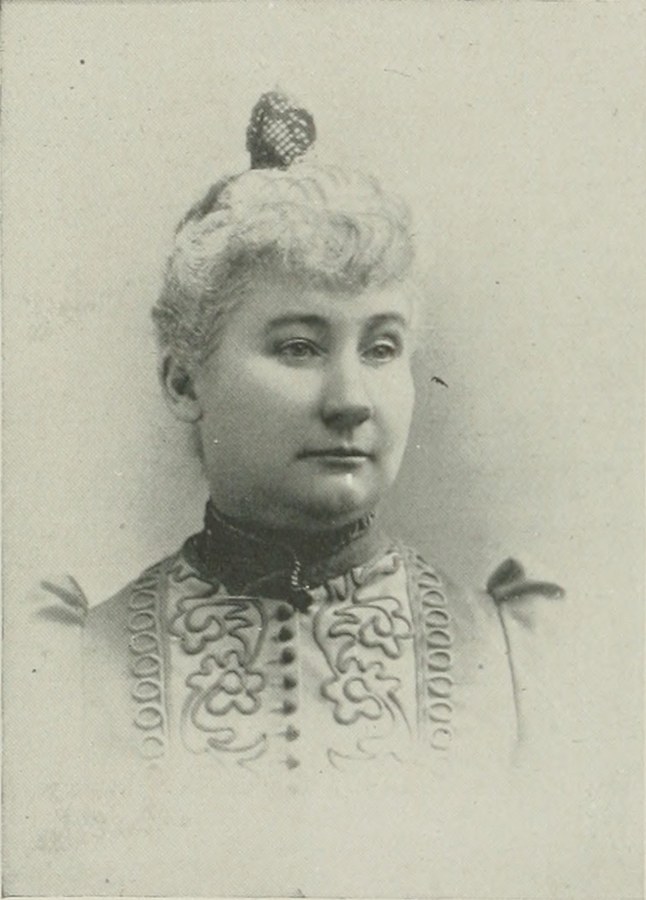
The preface to May Wright Sewall’s last book opens with a date. “During my adult life, to August 10, 1897,” she wrote, “my motto had been, ‘One World at a Time.’” After that date, she went on, she had “knocked at doors whose existence was then disclosed to me by gleams of light that seemed to proceed from other planes.”1
The book was called Neither Dead Nor Sleeping. The Bobbs-Merrill Company of Indianapolis published it in May 1920.2 Sewall died that July.2,3 The book is a record of more than two decades of messages she believed came from her husband and others who had died. In 1920 it surprised nearly everyone who knew her name.
The surprise is the story. Sewall was not a mystic by reputation. She was one of the best-known organizers in the country, a schoolmistress and suffragist whose life ran on committees, minutes and constitutions. Her own book shows how that life met a spiritualist camp, and Indiana’s newspapers show how her city received the news.
The organizer
The Indiana Historical Bureau’s marker at Veterans Memorial Plaza in Indianapolis gives the public outline. After moving to Indianapolis in 1874, it says, Sewall “gained renown as an educator, proponent of the arts, and women’s suffrage leader.” She helped establish the Indianapolis Equal Suffrage Society in 1878 and the International Council of Women in 1888. The Propylaeum, a women’s club building she co-founded, stood nearby from 1891 to 1923.2
The Equal Suffrage Society’s beginnings were recalled in the Richmond Palladium in January 1920. The society held its first meeting on April 2, 1878, at the home of Zerelda G. Wallace. Wallace was president. Sewall was secretary. The paper also noted that Sewall had written the Indiana chapter in the third volume of the History of Woman Suffrage.4
Booth Tarkington, who wrote the introduction to her last book, listed her work as if reading a résumé. She founded or helped found the Woman’s Club and the Contemporary Club of Indianapolis and was president of both. She was an organizer of the General Federation of Women’s Clubs, the Art Association of Indianapolis and the Propylaeum. From 1881 to 1888, he wrote, she chaired the executive committee of the National Woman’s Suffrage Association. She organized the National Council of Women of the United States and the International Council of Women. Tarkington thought that, with General Harrison and Mr. Riley, she would have been chosen as one of the “three most prominent citizens” of Indianapolis.5
In 1882, Tarkington wrote, she and her husband founded the Girls’ Classical School, and she was its principal for twenty-five years.5 The husband was Theodore Lovett Sewall.
A creed for two
Theodore Sewall, a Harvard graduate, came to Indianapolis on a visit and was asked to start a preparatory school for boys, according to his obituary in the Indianapolis Journal. He opened the Boys’ Classical School that September. In 1880, the Journal said, he married “Mrs. May Wright Thompson, one of the leading teachers in the Indianapolis High School.” The Girls’ Classical School followed in 1882. After 1889, when the boys’ school was sold, both devoted themselves to the girls’ school. He taught languages and managed the finances.6
He had tuberculosis. The Journal reported that he had spent a winter in the South and, later, a winter and spring in New Mexico and Arizona, “having given up all business in the hopes of recovery.” A specialist sent him to a sanitarium in Poughkeepsie, N.Y. He came home on the last day of November 1895. He died at the family residence on North Pennsylvania Street at 6 o’clock on the morning of Dec. 23.6 The city’s death list gave his age as forty-two and the cause as consumption.7
May Wright Sewall’s book begins with that morning. “On December 23rd, 1895, there occurred an incident large enough in comparison with the other incidents of my life to be called an event,” she wrote.8
She described their religion with care. They were, she said, of the school “known in the United States as ‘Parker’ or ‘Radical’ Unitarians.” They believed in immortality “much as we believed in the indestructibility of matter; but we felt no certainty of the survival of the separate individual entity.” They had a creed they repeated, she wrote, almost daily. If they did not survive death, “extinction will prevent all sense of loss.”8
A fortnight before he died, she wrote, her husband told her that if he discovered he survived death, he would first find out whether Jesus had returned to earth after the crucifixion. If he found that Jesus had, “I shall do nothing else until I shall have succeeded in returning to you.” She made no response, she wrote, and the subject was not raised again. After his death, the declaration “dropped entirely from my mind.”8
The funeral was held at the house on Dec. 26. “The burial was private,” the Journal reported.7
No mediums
In the months that followed, Sewall wrote, two friends urged her to visit a local “medium.” One was a lawyer and an officer of her Unitarian church. Both said she might again see and talk with her husband. “The proposal shocked me,” she wrote. “It seemed to me grossly to violate both reason and delicacy.” She answered that she and her husband had never needed “a mediator or an intermediary.”8
Instead she kept his memory in front of her. One of his last messages, dictated to be read to the students of the Girls’ Classical School, said: “To be well and to be at work is to have the two conditions necessary to happiness.” She inscribed it under large framed photographs of him and hung them in the rooms of the school and the house.8
The school kept his name, too. In August 1897, its advertisement in the Indianapolis Journal announced the school’s sixteenth year, with classes opening Sept. 21. It still listed “Theodore L. Sewall, founder,” above her name as principal.9
Woman’s Day
In 1897, Sewall wrote, her lecture engagements took her to Halifax, Nova Scotia. There she received an invitation to speak on “Woman’s Day,” Aug. 10, at Lily Dale, New York. She took it for one of the summer assemblies that had “a ‘Woman’s Day,’ when it was the custom to invite some advocate of political enfranchisement to discuss woman suffrage.” She accepted and forgot about it.10
Only a few days before the date, she learned that the engagement would take her into a “Spiritualists’ Camp.” She did not cancel. Spiritualists, she said, “not less than other people whose political conditions they share, need correct views on woman suffrage.”10
She arrived at the Lily Dale Assembly Grounds at 7 p.m. on Aug. 9, 1897. She was met by a woman she recognized from national suffrage conventions in Washington, the chairman of the press committee of the National American Woman Suffrage Association. The woman offered to introduce her to some of the camp’s most “famous mediums.”10
Sewall refused. She told her host, she wrote, that the word medium “was offensive, being synonymous in my opinion, with the words, deceiver, pretender, charlatan and ignoramus.”10
The next morning she walked through the camp alone and read the signs: “Business,” “Test,” “Independent Slate-Writing,” “Trumpet,” “Trance,” “Flower” and “Portrait Painting” mediums. They confirmed her fear, she wrote, that “I had fallen into a company of strangely ignorant and superstitious people.” She gave her speech and tried to leave.10
She could not. Her book lists what she called “a chain of what we ignorantly or irreverently name ‘accidents.’” The treasurer had been called away. The train schedule had changed. The carriage she hired broke down. A telegram postponed her next engagement, at Chautauqua, by three days.10
Then, she wrote, moments after she had refused an introduction to a famous “independent slate-writer,” she made an appointment with that same person on her own.10
The slates
The sitting took place the next day by an open window, in daylight, with children playing outside. Sewall described her precautions. She chose slates from a pile, sponged them off, tied them together with her own handkerchief and held them in her own hands. She wrote her questions on slips of paper that, she said, never left her hands. The medium sat across the table, “apparently doing nothing.”10
When she read the slates at her hotel, she wrote, they held “perfectly coherent, intelligent and characteristic replies” to her questions. She had been in the studio less than half an hour. Writing more than two decades later, she said she was as sure of it then as she was “after twenty-two years of constant study and experimentation”: she had acquired knowledge “at least of a survival of death.”10
More sittings followed, with a trumpet medium, a trance reader, a psychometrist and others. Her book reports that at the first trumpet sitting her husband told her: “I worked hard to bring you to this camp.” Within three days, she wrote, she had seen, talked with and received letters from her husband, her father, her mother and others in her family who had died.10
Hoosier First cannot test any of this, and does not try to. What the record shows is how Sewall described it: as an investigation with controls, recorded in writing, by a woman who had arrived calling mediums charlatans.
The private record
Sewall kept going back. Her book says that in the summer of 1901, while she ran the International Council of Women’s headquarters at the Pan-American Exposition in Buffalo, she returned to the camp on Aug. 9, four years after her first visit.11
The winter of 1901-02, she wrote, “was marked by heavy work and increased care.” That spring her health failed. One Sunday in March 1902, a homeopathic physician who was also a friend came to see her unsummoned. After an examination arranged privately, she wrote, the physician told her she had Bright’s disease, a kidney illness, in an advanced stage. The disease “was incurable,” she was told. Sewall refused further treatment.12
On her birthday, May 27, 1902, she wrote in her diary that her earlier experiences had stopped. “It seems to me that I have been unable for months to get still enough to hear or see or feel,” the entry reads. “After commencement is over I must try to find some psychic who can reopen the door for me.”12 Another diary entry from that summer reads: “It is very curious — I am again feeling perfectly well, lively and vigorous as I have not felt for nearly a year.”12
What followed takes up much of the book. Through automatic writing, she said, her husband introduced two guides: the composer Anton Rubinstein and a figure she called Père Condé. Rubinstein chose a piano for her and directed exercises. Père Condé ordered a diet. “On September eleventh Pere Conde directed me to drop breakfasts entirely,” she wrote, and later luncheons as well.13 Her weekly record, she wrote, showed her at 189 pounds on Sept. 11, 1902, and at 111 pounds shortly before the next Easter.13
She went on running the school and leading women’s organizations at home and abroad.12,5 The Historical Bureau’s research notes say she “chose to keep these experiences secret from the public, keenly aware that knowledge of them would harm her reputation as a rational, strong-willed advocate for equality.”2
The book
By 1920 that had changed. A Library of Congress copyright deposit stamp on the first edition reads May 6, 1920.1 The Washington Times reported on May 9 that Bobbs-Merrill was issuing the book “this week.”14
The Times found the author bedridden. “Although Mrs. Sewall is now an invalid and is very feeble, she has not given up her work,” it reported. A stenographer sat by her bed taking down messages she said related to things only she knew about, needed for club and organization archives. “They must be done before I die,” the paper quoted her. “And I’ve got to do them.”14 The paper also said the book had the endorsement of Sir Oliver Lodge, whom it called a “prominent English spiritualist.”14
Tarkington’s introduction did not take sides, and Bobbs-Merrill used that in its advertising. “Either her subconsciousness, her dream-maker, has been up to a dumfounding prodigy of dream-building,” he wrote, “or else Mrs. Sewall has been in communication with living people whom we have thought of as dead.” He allowed that “Probably there were professional ‘mediums,’ here and there, who imposed upon Mrs. Sewall.” He closed on her character: “In a sense, a deceptive book can not be written.” What was most vivid in it, he said, was “good will — the longing, in all humility, to be of great help to the world.”5
On May 18, 1920, Bobbs-Merrill bought space in the Indiana Daily Times for “The Most Talked of Book of the Day.” The ad quoted Tarkington: “It was to me dumfounding to find that for more than twenty years this academic-liberal of a thousand activities, May Wright Sewall, has been really living not with the living, so to put it.”15
The reception
The same day, the New York Evening World ran a satirical column by Marguerite Dean headed “Ask the Spooks They Know.” It treated the book as a diet story, retelling the weight loss under the guidance of “Rubinstein” and “Pere Conde.” The column noted that Sewall was “one of the best known club women and suffrage leaders in this country.”16
Other papers took the book at its word, or at least printed it. On May 24 the East St. Louis Daily Journal ran long extracts said to be messages from her husband about ether and the “etheric route” of spirit return. Because of “the extremely practical work Mrs. Sewall has done always,” it said, the book “naturally commands attention.”17 That October the Birmingham Age-Herald called it “a human document of eminent importance.”18
The Historical Bureau’s notes quote an Indianapolis Times writer looking back in 1946: “Nothing rocked the foundations of Indianapolis quite as much as the appearance of Neither Dead Nor Sleeping.” Hoosier First has not seen the 1946 article. The Bureau cites it from a biography of Sewall.2
July 1920
Sewall lived about two and a half months after the book appeared. The Indiana Daily Times of July 23, 1920, reported that she “died late last night at St. Vincent’s hospital after an illness of several months.” It called her “for more than thirty years the most prominent woman in Indianapolis.” Of the book, it said: “The publication of ‘Neither Dead Nor Sleeping,’ about six months ago, by Mrs. Sewall, caused a sensation that echoed around the world.”3
The dates in the record do not agree. The Times placed her death on the night of July 22, and its funeral report said she died on Thursday, which was July 22.3,19 The Lake County Times of July 23 also said she died “late last night.”20 The Historical Bureau, citing her death certificate, gives July 20.2 The Times’s “about six months ago” for the book also does not match the May publication.3,14 Hoosier First reports both dates as found.
Her funeral was held on the afternoon of Sunday, July 25, at All Souls Unitarian Church. The Rev. Frank S. C. Wicks preached. “As a pioneer she blazed a path which is now open to the ambition of womankind,” he said. “Education was the center from which all the activities of her life radiated.” According to the Times, he also paid tribute to “the work of her last few months of life in her efforts to complete her book on spiritualistic communication.”19
The Bureau’s notes point out the timing. Sewall lived to see Indiana ratify the Nineteenth Amendment on Jan. 16, 1920, but died about a month before the amendment took effect nationally.2
The verdict
In October 1920 the Philadelphia Evening Public Ledger reported that her Indianapolis friends were planning a memorial. Her book, “published a short time before her death, has created a profound impression,” it said.21 In 1923, the Bureau notes, a pair of bronze lampposts, the Sewall Memorial Torches, were dedicated at the Herron Art Institute.2
Tarkington’s introduction had laid out the possible explanations. “It appears that we have a choice of three explanations, none of which really explains,” he wrote. The first was that Sewall was “laboring under a hallucination, or a series of hallucinations, continuing more than twenty years.” The second was her subconscious mind. The third was that the communications were what she believed them to be. He dismissed the first. “To believe it the record of hallucination would be to make it too strange,” he wrote. “I think the truth must rest between the second and third.”5
In January 1921 a book column in the Richmond Palladium chose the first. The column offered Sewall’s book as a case “within the bounds of our own Indiana” of a writer who believed things had happened that had not. The writer did not believe that Rubinstein would take time to train “a woman as old as Mrs. Sewall,” and found “all the rest of the book” just as improbable. Then the column turned. “To have known Mrs. Sewall, however, is to believe that she could not consciously have tried to deceive the public.” Its conclusion was that “she was the victim of a remarkable series of strangely persistent hallucinations lasting through many years.”22
The novelist and the columnist disagreed about what had happened to her. They agreed about her. Neither called her a fraud. Tarkington wrote that no reader would believe she “has intentionally deceived herself.”5 Both found her honesty easier to believe than her experiences.
The gate
Sewall dedicated the book “to all honest souls who have hitherto believed the grave to be a chasm and who would be comforted to know that it is a gate that swings both ways.” She described the record as “made in a purely scientific manner.”1
In her preface she wrote that she published “at great sacrifice of that feeling, whether one call it modesty or timidity, which still inclines me to reticence.” She hoped some reader “trained to scientific investigation” might find clues in it.1
The suffrage leader who called mediums charlatans in 1897 did not stop being an organizer when she went to Lily Dale. She kept records and dated diary entries, and when she was dying she dictated what she wanted on file. The book was her last report. Indianapolis did not agree with it, but by the accounts printed that year it did not doubt that she meant it.
She is buried at Crown Hill Cemetery in Indianapolis, which lists her as an “educator, suffragist,” and supporter of the local arts.23
How she died
May Wright Sewall died at St. Vincent’s Hospital in Indianapolis in July 1920, “after an illness of several months,” according to the Indiana Daily Times.3 The Times placed her death late on the night of July 22; the Historical Bureau, citing her death certificate, gives July 20.3,2
None of the newspaper reports Hoosier First read named the illness that killed her.3,19,20 Her own book records that in 1902 a physician told her she had Bright’s disease, a kidney illness, but the book does not connect that diagnosis to her death 18 years later,12 and Hoosier First did not see the cause written on her death certificate. This story does not guess at it.