The Little Bird Woman
Gene Stratton-Porter grew up on a Wabash County farm where her father gave her every bird on the place, taught herself to photograph wild birds at the edge of the Limberlost swamp, and wrote books that sold by the million. She died in Los Angeles in December 1924, after a streetcar struck her automobile.
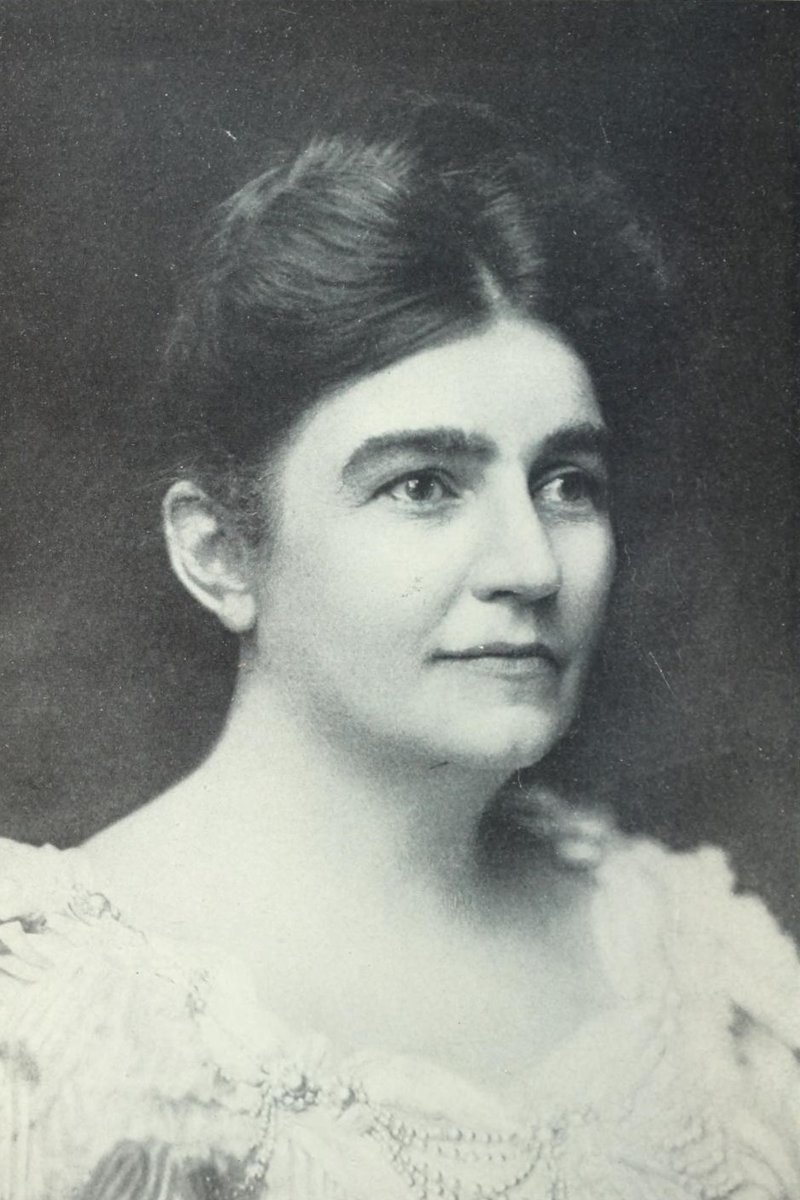
On the evening of Saturday, December 6, 1924, Gene Stratton-Porter left her home in Los Angeles and set out toward Hollywood in her automobile, with her chauffeur at the wheel. She was on her way to call on her brother, Jerome Q. Stratton. A short distance from her house, at a street intersection, a streetcar struck the car.4
She was taken to the receiving hospital. She never regained consciousness, and the physicians said her chances of recovery were slight.4 She died that night. The Associated Press gave the hour as 9:40 and the injury as a basal fracture of the skull.5
The Associated Press story that went out that night described her as a novelist and short story writer, the author of “The Girl of the Limberlost” and “Freckles,” and “a recognized authority” on birds and bird life.4 Her husband, Charles D. Porter, a banker of Rome City, Indiana, had been expected in Los Angeles for Christmas.4
In Indianapolis, the Times reported on the Monday that her death was expected to give “new impetus” to a movement to buy for the State of Indiana the land beside Sylvan Lake, in Noble County, where she had written many of her books.8 The original Limberlost, the swamp near Geneva that had given its name to her best-known novel, the paper added, “has nearly disappeared through drainage of the land.”8
She had spent her life writing about that swamp and the birds in it. Most of what she said about how that life began, she wrote herself.
Hopewell Farm
Gene Stratton-Porter was born in Wabash County, Indiana. The State of Indiana gives the date as August 17, 1863, and says she was the youngest of 12 children of Mark Stratton, a licensed Methodist minister and farmer, and Mary (Shallenberger) Stratton.14 The Indiana Historical Bureau, whose marker stands at her later home in Rome City, also gives 1863.1 The Associated Press obituary of 1924 said she was born “on a farm in Indiana in 1868.”4
In 1919 she published “Homing With the Birds,” which she subtitled “the history of a lifetime of personal experience with the birds.” Its first chapter is about her childhood.2
“My experience with birds began as soon as I could walk, at my home, Hopewell Farm, in Wabash County, Indiana,” she wrote. The public road ran north and south through the middle of the land. There were cultivated fields and a tract of native timber on one side; on the other were the house, a garden, and a large orchard. Three streams crossed the farm and joined a larger stream that ran on to the Wabash River. “The land was new,” she wrote, “a large part of it having been cleared and put into cultivation by my father.”2
She said her father was the only person she heard, in her childhood, speak of protecting birds for the good of the crops. He would not let his family go to the pigeon roosts at night to club the wild pigeons and carry them away by bagfuls, as some of the neighbors did. He said, she wrote, that “such proceedings would eventually end in the extermination of the birds.”2
One of her first memories, she wrote, was of finding a dead woodpecker under a cherry tree. She did not know the word “dead” yet. She tried to make it fly, tossed it through the air, carried it upstairs and launched it from a window, and fed it green gooseberries. Her father explained that he never allowed song birds to be killed, but that woodpeckers took the fruit. She made him an offer: “If you will make the boys stop shooting woodpeckers, I will not eat another cherry. The birds may have all of mine.” Her father, she wrote, “said that was a bargain.”2
The hawk
The story in “Homing With the Birds” that she told at the greatest length is about a hawk.2
One summer morning, she wrote, she heard her father’s rifle in the dooryard and saw a large chicken hawk come whirling down into the milk yard, one wing broken. Her father went to finish it with the butt of the rifle. She ran in front of him and covered the bird with her body. The gun, she wrote, went past her head “so close that the rush of air fanned my face.”2
“Are you mad?” her father cried. “I barely missed braining you!”2
She begged for the bird. She had been watching the hawks’ nest in a big oak over the meadow brook, and had been quietly throwing the bones they dropped into the current so that no one else would find it. Her father said the hawk would tear her face. She laid her hands on it, and it huddled against her.2
“God knows I do not understand you,” her father said, by her account. “Keep the bird, if you think you can!”2
She nursed the hawk. Her mother gave her a powder from the medicine chest for the wound and, she wrote, smiled and said: “What a little bird woman you are!” Within a month the hawk followed her around the yard and garden much like a dog. After that, she wrote, every bird on the farm that was caught in a reaper, stepped on by stock, or hurt by a cat was brought to her.2
The next spring, according to the second chapter, her father called her to him and asked whether she would like the most beautiful thing ever made by man. Then he told her he had something finer: “a gift straight from the hands of the Creator.” He formally gave her “the personal and indisputable ownership of each bird of every description that made its home on his land.”2 She believed the hawk had something to do with it, because the gift came with no exceptions; it included the hawks and owls that took the poultry, and the woodpeckers that took the cherries.2
The Limberlost
In 1886 she married Charles D. Porter, a druggist in Geneva, Indiana, and their only child, Jeannette, was born in 1887, according to the State of Indiana.14 The Limberlost was a swamp near Geneva, in Adams County.8
She described the swamp as it was when she arrived, in “Moths of the Limberlost,” published in 1912. There were miles of unbroken forest, she wrote, and streams of running water, and the roads around the edges were corduroy, “made by felling and sinking large trees in the muck.” In winter it was beautiful with snow and frost; “from May until October it was practically tropical jungle.”3
In a village “not a mile from the Limberlost,” she wrote, “my husband built the log cabin of my dreams for me.”2 That house is the one the Indiana Historical Bureau calls Limberlost Cabin, at Geneva.1
She was not sure at first what she was meant to do. She tried music for a time, practicing the piano and the violin for hours a day.2 Then she began writing about nature, and the editors who took her articles wanted pictures. They sent her drawings of mounted birds, “stuffed with excelsior, and posed by men.” She would not let them run beside her writing. “I was horrified,” she wrote.2
The answer, by her account, was a parrot. The family’s African parrot, the Major, often ate from a plate beside her husband’s place at the table, and once it seized an oyster from a fork and went fussing up and down the back of its chair. Everyone laughed, and she exclaimed, “How I wish I had a camera!”2 That Christmas her family gave her a small hand camera. Her first picture of the Major was “sadly undertimed and overdeveloped,” she wrote, but she could see that it showed a living bird as it really was. “I had found my medium! I could illustrate what I wrote myself!”2
She bought chemicals and print paper and taught herself. The next spring she went into the field. She spent more than a thousand dollars, she wrote, on four cameras and “a small wagonload of field paraphernalia,” turned the downstairs bathroom into a darkroom, and washed her plates and prints in the kitchen sink, on the turkey and meat platters. At the same time she was doing all the work of the Cabin except the washing, and making most of her daughter’s clothes.2
Her method in the field, she wrote, was the one she had learned on the farm as a child: set the camera before the nest, cover it with a green cloth or a few twigs, move slowly, and wait until the birds accepted her as part of their daily life. “My procedure,” she wrote, “was merely to turn child’s play into woman’s work.”2
The work was hard, and sometimes dangerous. She wrote of working in a swamp in southern Michigan where there were so many big rattlesnakes that her guide refused to leave the wagon. After one day of photographing in heat by the Wabash River for “The Song of the Cardinal,” she wrote, she waded the river, took a chill, and had “a ten day fight for my life.”2
The Indiana Historical Bureau marker records that she wrote for magazines including Outing and the Ladies’ Home Journal and published photographs and studies of the life of nearby woods and swamps, and that her novels “blended fiction with vivid descriptions of nature.”1 Her 1924 obituary said she had spent two years on the natural history staff of Outing.6
Freckles and the Girl of the Limberlost
The swamp gave her the settings of her two best-known novels, “Freckles” (1904) and “A Girl of the Limberlost” (1909).1 In “Moths of the Limberlost” she said where the first one came from. Lumbermen came into the swamp, she wrote, looking for tall timber for ship masts, and others followed to strip the hardwood for fine furniture, “and through my experience with the lumbermen ‘Freckles’ story was written.”3
The books sold in enormous numbers. The marker at Rome City says ten million copies of her books had been sold by 1924.1 The bureau’s notes on the marker say she achieved financial independence through her writing “at a time before many women had professional careers.”1
The same lumbermen, and the men who came after them, ended the swamp she was writing about. After the timber was cut, she wrote, “a ditch, in reality a canal, was dredged across the north end through my best territory, and that carried the water to the Wabash River until oil men could enter the swamp.”3 By 1912, she wrote, “the Limberlost exists only in ragged spots and patches.”3
Wildflower Woods
In “Homing With the Birds” she described what came next. Her territory, she wrote, had been “cleared, drained, and put under cultivation, until the birds had flown, the flowers and moths were exterminated.”2 She searched the state for another piece of “true Limberlost country” and found it at the head of the same swamp region, where, she wrote, there were “lakes by the score.”2
“Here, with the earnings from my work, I bought one hundred and twenty acres of rolling land, sloping abruptly to a small lovely lake,” she wrote. She built a second cabin there, larger than the first, with a library, a darkroom and a printing room where she could work in seclusion. She called it “Limberlost Cabin, north; the other, south.”2 The State of Indiana gives the year of the move as 1913 and the place as Sylvan Lake at Rome City; the home became known as the Cabin at Wildflower Woods.14
The last chapter of “Homing With the Birds” is titled “Shall We Pay Our Debt?” In it she argued that life on earth depended on birds, and that if every bird were swept away “man could not long survive.” She wrote that it was “my self-appointed task to preserve useful bird life, not to take it on any excuse whatever.”2 The Milwaukee Leader’s 1924 obituary called her one of the founders of the Izaak Walton League of America.7
California
The State of Indiana says that before she left Indiana she wrote to Governor Warren T. McCray offering Wildflower Woods to the State as a bird sanctuary.14 The Indianapolis Times reported in 1924 that she had offered the land and the cabin to the State as a park “for an amount equal to the actual material she had put into it,” and that the State conservation department, “without money or power to raise money, was forced to decline the offer.”8
She went to California and into the motion picture business. The Associated Press reported that in March 1924 she left her 120-acre tract on Sylvan Lake, which it called “a haven for birds and little animals of the forest,” for Los Angeles, after more than a year spent making film productions of her stories. She organized Gene Stratton Porter, Inc., a Delaware corporation, to make and exploit the films.4 The same report said she had been a resident of California for the last five years; the State of Indiana gives 1920 as the year she moved there.4,14 The Indiana Historical Bureau marker says that by 1924 she had organized her own movie production company.1
She was there, making pictures and writing, when she died.4
In Rome City, the United Press reported on December 8, old friends were mourning her, and were disappointed to learn that the funeral would probably be held in Los Angeles. They were planning, the report said, to renew her petitions to have the state take over her land as a reservation to preserve the wild life she had gathered there.10
The verdict
The Birmingham Age-Herald, in Alabama, wrote an editorial about her on December 8. “Although regrettably claimed by accidental death,” it said, “Gene Stratton Porter was fortunate in that she had lived a full life.” It said the “charm and verity” of her observations of nature were attested by her place on the natural history staff of Outing.13
In Los Angeles, Coroner F. A. Nance planned an inquest, the Associated Press reported, “though the reports of detectives indicated that the crash was unavoidable.”9 An International News Service dispatch in the South Bend News-Times reported that the coroner said he believed the accident unavoidable and her chauffeur blameless.10
The coroner’s jury found otherwise. “The negligence of a motorman caused the death of Gene Stratton Porter, novelist and naturalist,” the Evening Star reported from Los Angeles.11 The Seattle Star reported that the jury found the motorman “negligent” but not guilty of criminal carelessness.12 No one from the district attorney’s office attended the inquest, the report noted, so there was no official word on whether the motorman would be charged.11 The newspapers read for this story did not report what happened to him.
The Seattle Star reported that the funeral would be held in Los Angeles and that her body would “rest in a vault pending decision on the final burial place.”12 According to the State of Indiana, she was buried in Hollywood Cemetery. In 1999 her body and her daughter’s were moved to Indiana and buried on the grounds of the Gene Stratton-Porter State Historic Site at Rome City, at Wildflower Woods.14
How she died
Gene Stratton-Porter died on the night of December 6, 1924, in Los Angeles, of injuries suffered when a streetcar struck her automobile at a street intersection a short distance from her home.4 She was on her way to visit her brother. She never regained consciousness at the receiving hospital.4 The Associated Press reported that she died at 9:40 p.m. and that the fatal injury was a basal fracture of the skull.5 The Milwaukee Leader reported a compound fracture of the skull and internal injuries.7
Her chauffeur was the only other person in the car.7 He was injured; the papers did not agree on how badly, and they spelled his name Cowdy, Cowdry and Gowdy.4,5,10,7 By his account, as the Associated Press reported it, he had slowed almost to a stop to let an eastbound car pass and was on the tracks before he saw that he was directly in the path of a westbound car.5,6 The Associated Press reported that her car was struck on the side and back of the driver’s seat by a streetcar coming down a grade, and was reduced to wreckage.5
The coroner’s jury found that the negligence of the motorman caused her death.11